Working out at home used to mean one of two things following a generic YouTube video or winging it completely. Neither gets you very far. But in 2026, a third option has quietly become the smartest choice for millions of people AI personal trainers for home workouts.
These are not just glorified step counters or randomized exercise generators. The best AI personal trainer apps today use machine learning, real-time voice coaching, wearable integration, and adaptive programming to deliver something genuinely close to having a certified trainer standing beside you in your living room without the $150/hour price tag.
Whether you are a complete beginner setting up a corner of your bedroom or someone with a full home gym who wants smarter programming, this guide breaks down everything you need to know, how AI fitness coaching works, which apps are worth your money, and exactly what to look for before you subscribe.
What Is an AI Personal Trainer – Really?
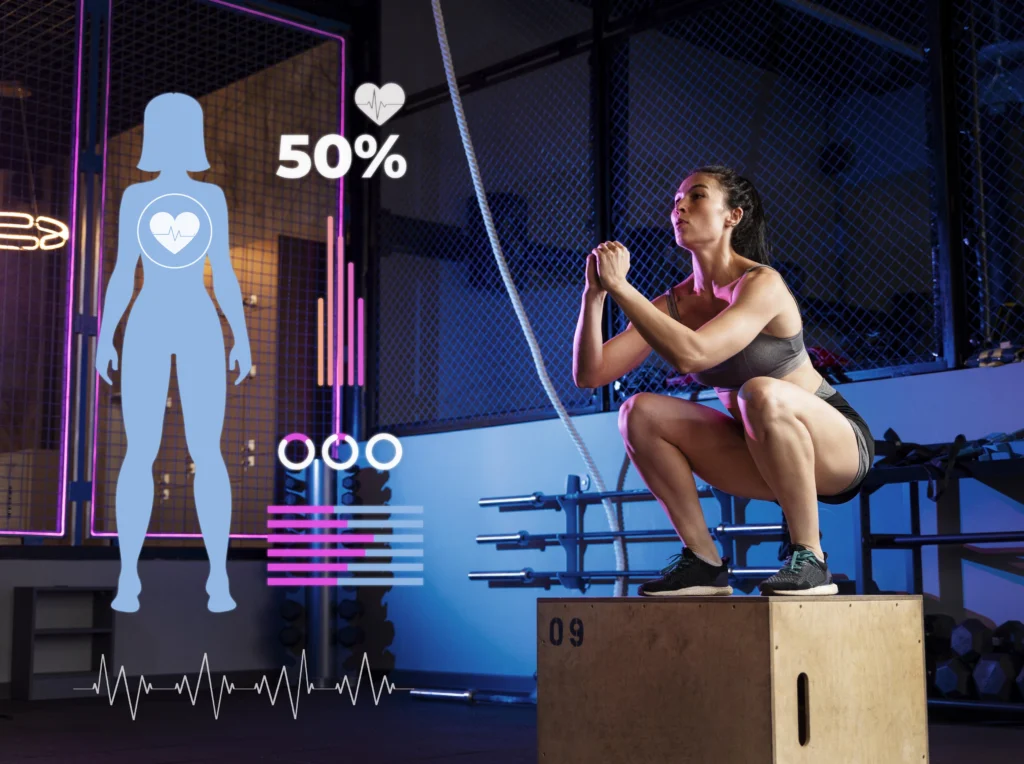
Before diving into app rankings, it is worth being honest about what “AI personal trainer” means and what it does not.
A true AI personal trainer does more than spit out a weekly workout list. It makes real decisions: what to train today, how hard to push, when to back off, how to substitute exercises when your equipment changes, & how to keep you progressing across months without injury. An app that only generates today’s workout isn’t coaching it is scheduling.
The technology powering these apps has evolved dramatically. Early fitness apps pulled exercises from a database more or less at random. Modern AI trainers in 2026 learn from millions of workout sessions, understand exercise science principles, and integrate biometric data from your wearable devices to make intelligent, personalized recommendations. Many now offer real-time voice coaching that adjusts while you’re mid-set. That’s a fundamentally different product than what existed three years ago.
The numbers back up the impact. People using AI personal trainers stay consistent with their workouts 73% more than those going solo. Users of voice-guided AI trainers complete an average of 3.2 workouts per week compared to 1.8 workouts for users of standard video-based fitness apps. When you are paying $10–30/month versus $50–150 per session for a human trainer those outcomes represent extraordinary value.
How AI Fitness Coaching Works: The Technology Behind It
AI fitness coaching combines advanced algorithms, motion tracking, and personalized data analysis to create workouts tailored specifically to you. analyzing your performance, goals, & body metrics, AI trainers provide real-time guidance, adjust routines dynamically, & help maximize results all without needing a human trainer. the technology behind AI fitness coaching reveals how it makes home workouts smarter, safer, and more effective.
Machine Learning & Adaptive Programming
The core engine of any AI fitness coach is a machine learning model trained on large datasets of workout performance, recovery metrics, and progression patterns. When you complete a session, the AI does not just log your reps it analyzes how your performance compares to your previous sessions, your stated goals, your recovery data, and population-level patterns for someone at your fitness level. from that analysis, it adjusts the next session automatically.
Wearable & Biometric Integration
The best AI personal trainer apps in 2026 connect with Apple Watch, Garmin, WHOOP, Oura Ring, & other wearables to incorporate heart rate variability (HRV), sleep quality, daily readiness, and recovery scores into programming decisions. This is a game-changer for home training. Instead of guessing whether today should be a hard push or a recovery session, the AI reads your physiological data and decides for you. Apps like SensAI are specifically built around this reasoning: if your HRV is down and your sleep was poor, the system automatically lightens the session, even if the original schedule called for something intense.
Real-Time Voice Coaching
A growing number of platforms now offer conversational AI that speaks to you during your workout counting reps, cueing your breathing, noticing when you report something feels off, and adjusting on the fly. Ray, for instance, is built entirely around this voice-first experience. The difference between an app that shows you a plan and an app that talks you through every rep is enormous in practice. It’s the difference between a map and a navigator.
Computer Vision & Form Correction
Hardware-integrated systems like Tempo use 3D Time-of-Flight (ToF) sensors to track your body movements in real time and flag form deviations mid-set. This technology was science fiction for home users a few years ago. Now it is accessible at a monthly subscription price. for injury prevention and technique development particularly important for beginners training at home without supervision this kind of real-time feedback is invaluable.
The 7 Best AI Personal Trainers for Home Workouts in 2026
1. Ray — Best for Voice Coaching
Ray is the standout choice if you want a genuine coaching experience rather than just a plan. It delivers true conversational voice coaching, speaking to you through every rep, counting automatically, and adapting in real-time based on your feedback. Ray also integrates biometric data from wearables and adjusts session intensity based on your daily readiness.
- Best for: People who miss the motivation of having a trainer in the room
- Price: $19.99/month
- Platform: iOS, Android
2. Fitbod — Best for Strength Training at Home
Fitbod is the category leader for AI-driven strength programming and remains the go-to choice for home gym users focused on building muscle. It analyzes your workout history, the equipment you have available (from a full squat rack to a single set of dumbbells), and recovery patterns to generate workouts that apply progressive overload intelligently. When you skip a session or your available equipment changes, Fitbod adapts instantly rather than sticking rigidly to a template.
The free tier is genuinely useful, and at $19.99/month or $79.99/year, the full version is among the best value options in this space.
- Best for: Home gym users focused on strength and muscle gain
- Price: Free tier available: $19.99/month or $79.99/year
- Platform: iOS, Android
3. SensAI — Best for Wearable Integration & Recovery-Aware Training
SensAI is the most sophisticated option for data-driven athletes who want their AI trainer to reason about HRV, sleep quality, and recent training load together before programming each session. If you wear a fitness tracker and care deeply about recovery science, SensAI is designed specifically for you. It integrates with most major wearables and uses a conversational LLM layer that can explain why your session was modified not just that it was.
- Best for: Athletes who track biometric data and want science-backed load management
- Price: Varies by plan
- Platform: iOS, Android
4. Freeletics — Best Free AI Trainer for Bodyweight Home Workouts
If you’re training with zero equipment or you simply want to get started without spending money Freeletics is the strongest free AI workout app available. It specializes in bodyweight and HIIT-style routines that require nothing but floor space, and its AI adapts training plans based on your fitness level, progress, & available time.
The free version offers a solid range of workouts with progress tracking and basic adaptation. Premium plans ($34.99 for 3 months to $79.99 annually) unlock full personalization, coach feedback, and additional training styles. Its average rating sits at 3.8/5, with users consistently praising its intensity and flexibility for home use.
- Best for: Bodyweight training, no-equipment home workouts, budget-conscious users
- Price: Free tier available; premium from $34.99/3 months
- Platform: iOS, Android
5. Forge — Best AI Trainer for Conversational Support
Forge fills a specific gap that most AI fitness apps ignore: the motivational and emotional side of training. Beyond generating workout programs, Forge lets you chat 24/7 with AI trainers that have distinct coaching personalities. You can ask form questions, troubleshoot schedule disruptions, and get encouragement from an AI that feels surprisingly human in conversation.
For home workout users who struggle with isolation and motivation one of the biggest challenges when training without a gym community Forge conversational layer provides a meaningful psychological scaffold alongside the programming.
- Best for: Users who want motivational support and Q&A alongside their programming
- Price: Free tier available; premium features vary
- Platform: iOS, Android, Web
6. Aaptiv (SmartCoach) — Best for Audio-Guided Workouts
Aaptiv’s SmartCoach feature creates tailored workout plans using machine learning and then delivers them through an extensive library of over 8,000 audio and video classes across multiple fitness categories. If you prefer an audio-led experience similar to running with a podcast but with an actual trainer guiding your reps Aaptiv hits a sweet spot that most apps miss.
It integrates with wearables for heart rate-based feedback and tracks your progress across sessions. The breadth of workout styles (yoga, running, HIIT, strength, stretching) makes it particularly versatile for home trainers who want variety.
- Best for: Audio-guided workouts, variety seekers, users who want class-format training at home
- rice: ~$14.99/month
- Platform: iOS, Android
7. Tempo — Best Hardware-Integrated AI Home Gym
Tempo is in a different category from the apps above it is a hardware – software system that uses 3D Time-of-Flight sensor technology to track your body in real time and provide form corrections during every set. You will need to purchase Tempo equipment (Studio or Move), but the result is the closest thing to having a coach watch your form at home that currently exists.
The AI engine analyzes body composition, workout history, and biometric data to generate personalized training plans, and Daily Readiness scores help calibrate intensity based on sleep and recovery. for serious home gym users who prioritize injury prevention and technique especially those doing barbell or dumbbell work Tempo’s form-correction capability is unmatched.
- Best for: Home gym owners who want real-time form correction
- Price: ~$39/month (requires hardware purchase)
- Platform: Proprietary hardware + app
What to Look for in an AI Home Workout App: 5 Key Criteria
With dozens of options on the market, these are the features that actually separate good AI fitness coaches from expensive workout calendars. Choosing the right AI home workout app can make all the difference in achieving your fitness goals.
From personalized training plans to progress tracking and real-time feedback, knowing what features matter most is essential. In this section, we’ll break down 5 key criteria to help you select the perfect AI fitness app for your home workouts.
1. Adaptive Programming Based on Recovery, Not Just Preference
The science is clear: load management matters more than any single session. An AI coach that can’t see your recovery state is making decisions blind. Look for apps that integrate wearable data or at minimum ask about your energy and soreness before generating your next session.
2. Equipment Flexibility
Home setups vary wildly. The best AI trainers adapt instantly to whatever you have resistance bands, one pair of dumbbells, a full rack, or nothing at all. Before subscribing, test whether the app can handle your specific equipment constraints without pushing you toward exercises you can’t do.
3. Exercise Demonstrations with Multiple Angles
Without a trainer watching, video cues become your form check. Look for apps with large exercise libraries that show movements from multiple angles, not just a static image or a single front-facing clip.
4. Progress Tracking and Visualized Analytics
Detailed performance logs showing strength gains, volume progression, and consistency metrics give you a feedback loop that keeps you motivated. The best apps visualize this data in clear charts rather than burying it in spreadsheet-style logs.
5. Honest Pricing Transparency
A solid AI fitness app costs $10–30/month for most users. Be skeptical of apps with aggressive upsells, features locked behind multiple tier upgrades, or vague pricing that only becomes clear after you have signed up.
AI Personal Trainers vs. Human Trainers: The Honest Comparison
Research from 2026 gives us a nuanced answer to the “AI vs. human” question. A 65,000-user study found that while AI personal trainers work effectively, hybrid AI-human coaching delivers 74% better results than AI-only approaches. Separately, research shows that AI trainers are 80–90% as effective as human trainers for self-motivated individuals a significant qualification.
Where AI wins: cost ($10–30/month versus $200–600/month for a human trainer), availability (24/7, never cancels), consistency, and adaptability across changing equipment and schedules.
Where human trainers still win: hands-on form correction for complex movements like Olympic lifts, nuanced guidance for medical conditions or significant injuries, and the genuine personal relationship that some people need to stay accountable long-term.
The bottom line is practical: if you are self-motivated, clear on your goals, and training at home where in-person coaching isn’t an option anyway, a well-chosen AI personal trainer delivers remarkable value. If you are brand new to lifting and worried about injury, consider a hybrid approach a few sessions with a human trainer to learn foundational movement patterns, then transition to an AI app to maintain and progress.
The Future of AI Home Fitness: What’s Coming Next
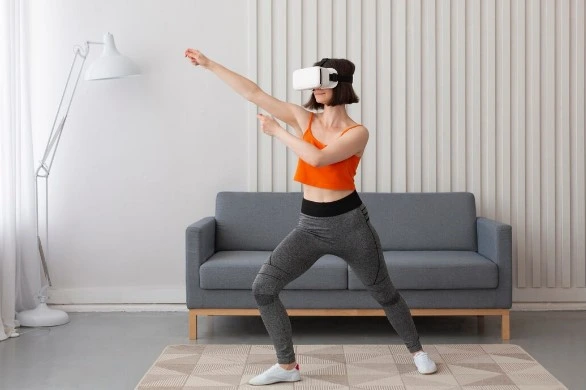
The AI fitness landscape in 2026 is accelerating. Several developments are already in late beta or early rollout. The world of AI home fitness is evolving faster than ever, promising smarter workouts, advanced motion tracking, and fully personalized coaching.
we explore what’s next for AI trainers and how emerging technology will transform the way we exercise at home.
Predictive injury risk modeling will analyze movement quality, workload trends, and recovery markers to flag elevated injury risk 2–4 weeks before problems develop catching subtle form degradation before you consciously notice it.
Augmented reality coaching is moving from concept to product. Several companies are launching AR experiences where a holographic coach demonstrates exercises with real-time form overlays on your body, visible through a headset or smart glasses.
Biometric-nutrition integration is collapsing the boundary between AI fitness coaches and nutrition coaches. Platforms are combining training data with glucose monitoring, sleep stages, and metabolic feedback to suggest not just what to train but what to eat and when to eat it for optimal performance.
Google’s entry into AI health coaching through Gemini-powered Fitbit integration signals that major tech companies now recognize AI fitness coaching as a mass-market category which means more competition, lower prices, & faster innovation ahead.
Final Verdict: Which AI Personal Trainer Is Right for You?
With so many AI personal trainers available, choosing the right one can feel overwhelming. In final section, we summarize the top options and help you decide which AI trainer best fits your fitness goals, lifestyle, and home workout needs.
Here the quick decision guide…
- Want voice coaching that talks you through every rep? → Ray
- Building strength with home gym equipment? → Fitbod
- Training with zero equipment on a budget? → Freeletics (free tier)
- Wear a fitness tracker and care about recovery science? → SensAI
- Need motivational support and coaching conversations? → Forge
- Prefer audio-led classes with variety? → Aaptiv
- Serious home gym user who wants form correction? → Tempo
The AI personal trainer market has genuinely matured. These apps do not just generate workouts anymore the best ones coach you through them, adapt when life disrupts the plan, and keep you progressing across months without injury. for home workout users especially, that a combination that used to require either a lot of money or a lot of guesswork.
Prices and features current as of May 2026. Always verify with the app’s official website before purchasing.
Related Articles You Might Enjoy…
- Best Home Gym Equipment for Small Spaces (2026)
- How to Build a 12-Week AI-Guided Fat Loss Program at Home
- HIIT vs. Strength Training: What Your AI Trainer Should Prioritize
- Wearables That Work Best with AI Fitness Apps in 2026